
Speed limits may appear to be a basic measure for controlling road safety and traffic flow, but in practice they are highly dynamic and context-aware. In addition to permanent restrictions, drivers and vehicle systems must account for limits that change because of roadworks, congestion, weather conditions, road repairs, or time-of-day rules.
TomTom’s Unified Speed Restrictions solution offers a strong example of how this complexity can be addressed with the NDS.Live Rules module. Using the module as a standardized way for representing both permanent and temporary speed limits, TomTom delivers a consolidated and continuously updated data feed. This showcases the value of NDS.Live in providing the schema foundation to support reliable, integration-ready speed information for modern vehicle systems.
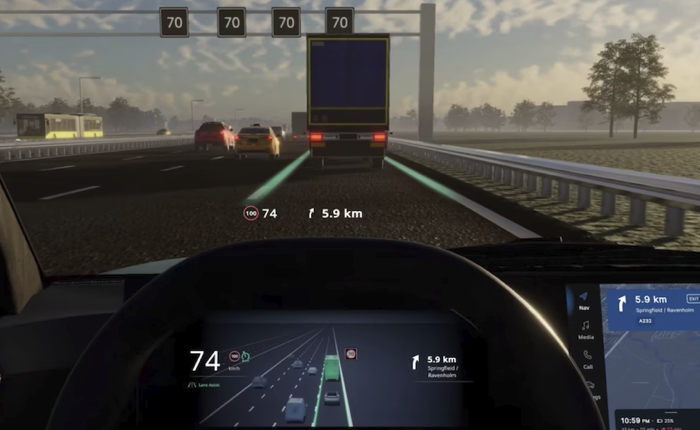
The NDS.Live Rules module provides attributes that describe driving rules in a structured map context. These rules can be defined at different levels, including the region level, transitions on roads or lanes, ranges along roads or lanes, and specific positions. This allows map providers to model general regulations as well as localized and highly specific road rules.
For speed limits, this structure is especially valuable. Restrictions may be permanent, conditional, or temporary, and they sometime depend on context such as time of day, weather, or traffic conditions. The schema design of the NDS.Live Rules module helps represent these cases accurately and efficiently, making it well suited for speed limit use cases where the effective rule depends on more than a single static value.
A key strength of TomTom’s approach is that it captures the effective speed limit at any given moment by combining different types of speed restrictions within a single feed.
Permanent speed limits, which make up the majority of restrictions, can generally be grouped into three categories:
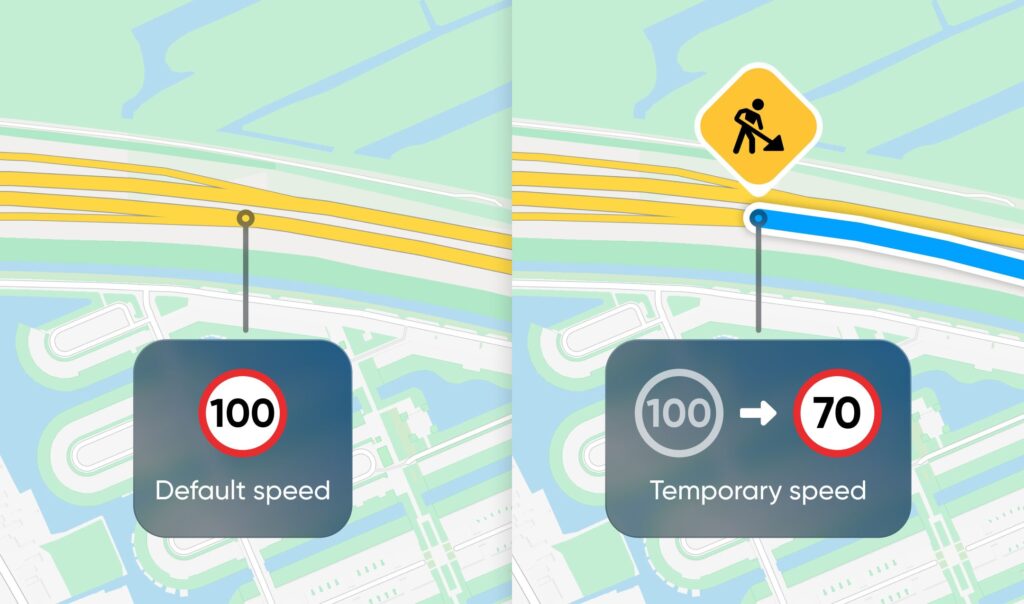
Temporary speed limits, by contrast, are live restrictions caused by changing road conditions such as roadworks, incidents, congestion, reroutes, traffic management measures, or weather events. They highlight the need for speed information that is continuously updated and context-aware.
Electronic speed limit signs, often referred to as Variable Message Signs (VMS), introduce a dynamic element to speed regulation. Unlike static road signs, they can display changing speed limits in real time based on prevailing conditions such as traffic flow, incidents, weather, or roadworks. These electronically controlled signs are typically managed by traffic authorities and can either temporarily override permanent limits or act as adaptive extensions of conditional restrictions, reinforcing the need for speed information that is both real-time and context-aware.
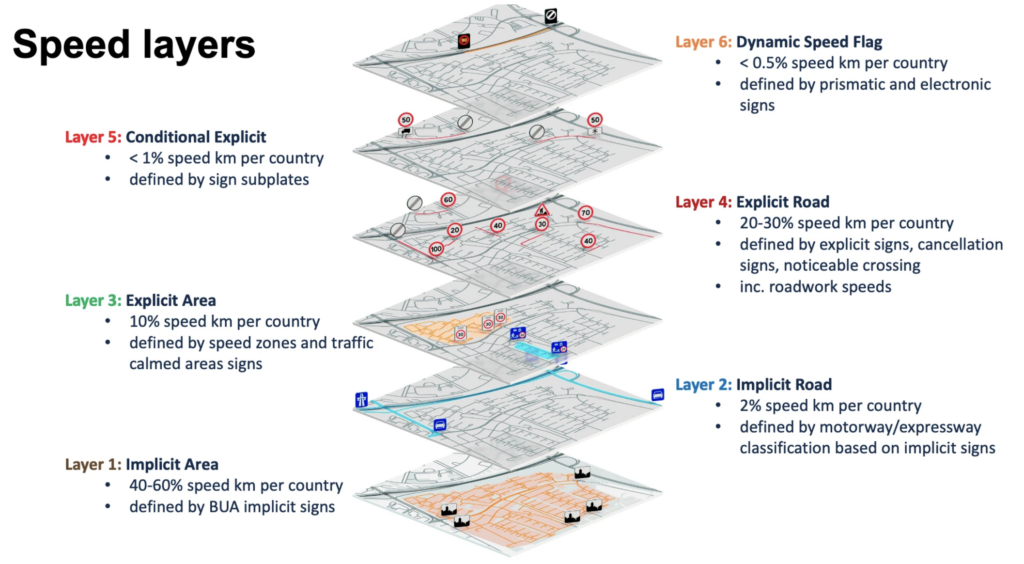
TomTom’s permanent speed data is already sufficient to support ISA compliance, but adding temporary and live speed restrictions takes the use case further. It allows vehicles to respond not only to fixed rules, but also to dynamic changes in the driving environment.
This is especially relevant for ADAS and automated driving. Sensors can detect immediate surroundings, such as nearby vehicles or roadside signs, but map-based speed information adds broader context. It helps the vehicle understand what lies ahead and plan more smoothly. When a sudden change in speed limit is known in advance, the system can prepare for it more naturally, avoiding abrupt reactions that may reduce comfort or even create safety issues.
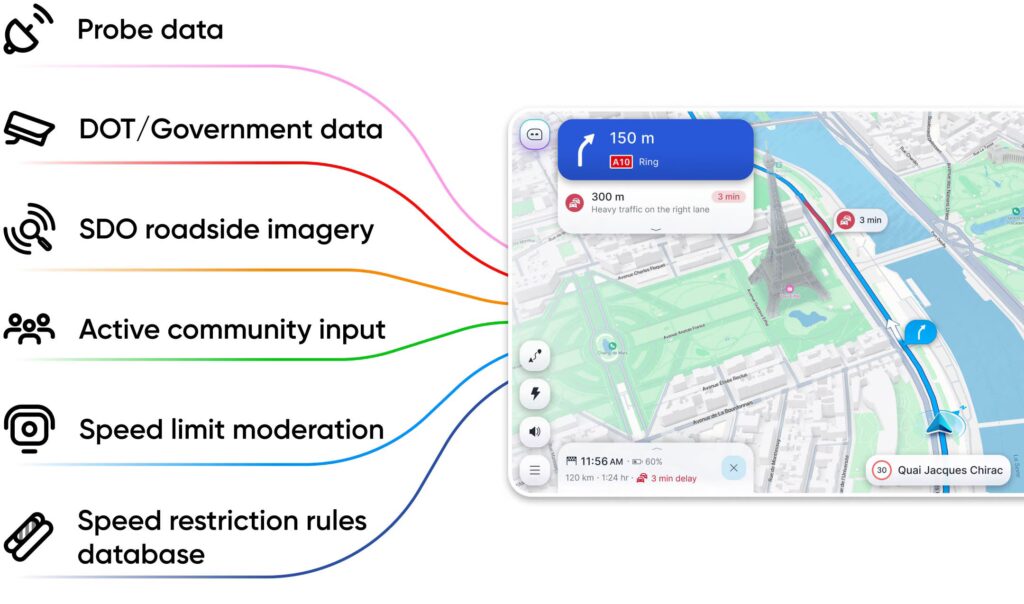
TomTom collects live speed data through a multi-source fusion process designed to ensure both accuracy and freshness. Instead of relying on a single input, the company cross-validates several sources before delivering the information to the vehicle.
These sources include sensor-derived observations, which capture temporary roadside signs through vehicle sensors and cameras. Probe data is another important source, showing how vehicles are actually moving and where speed behavior begins to deviate from the permanent speed profile. This can help identify temporary restrictions as well as the precise location where one speed limit ends and another begins.
TomTom also integrates governmental data sources in countries where road authorities publish speed-related information, including live speed limits or Variable Message Sign content. In addition, TomTom Street View Car Imagery and Mobile Mapping (MoMa) provide inputs that help validate road signs, detect changes in speed restrictions, and confirm whether limits have been added, modified, or removed. By combining all these inputs, TomTom is able to maintain a speed service that remains both current and precise enough for automotive use.
TomTom’s Unified Speed Restrictions solution is a strong example of NDS.Live in action. The Rules module provides the schema foundation for representing complex speed logic, while TomTom applies that structure within its own production pipeline to deliver a consolidated, continuously updated speed limit feed for vehicle systems. From an NDS perspective, this example shows how a standardized model can support a production-ready implementation that improves navigation, supports ADAS, and contributes to safer, more intelligent mobility experiences.
To learn more about NDS.Live modules and practical implementations such as TomTom’s speed limit use case, visit the NDS Developer Portal.
Back to news →